Meta's recent commitment to purchase renewable energy from two major Texas solar projects represents a significant milestone for the state's energy infrastructure. The technology company has secured 100% of electricity output from ENGIE's $900 million Swenson Ranch Solar project, a 600-megawatt facility scheduled for completion in 2027. Additionally, Meta has contracted for the full output of the 400-megawatt 1000 Mile Solar project, which will be operational next year.
Project Specifications and Timeline
The Swenson Ranch Solar project, located in Stonewall County southeast of Lubbock, will become ENGIE's largest solar installation within its 11-gigawatt North American portfolio. The facility will generate approximately 1.4 million megawatt-hours of clean electricity annually, sufficient to power approximately 130,000 homes. Construction activities are expected to commence in 2025, with commercial operations beginning in 2027.
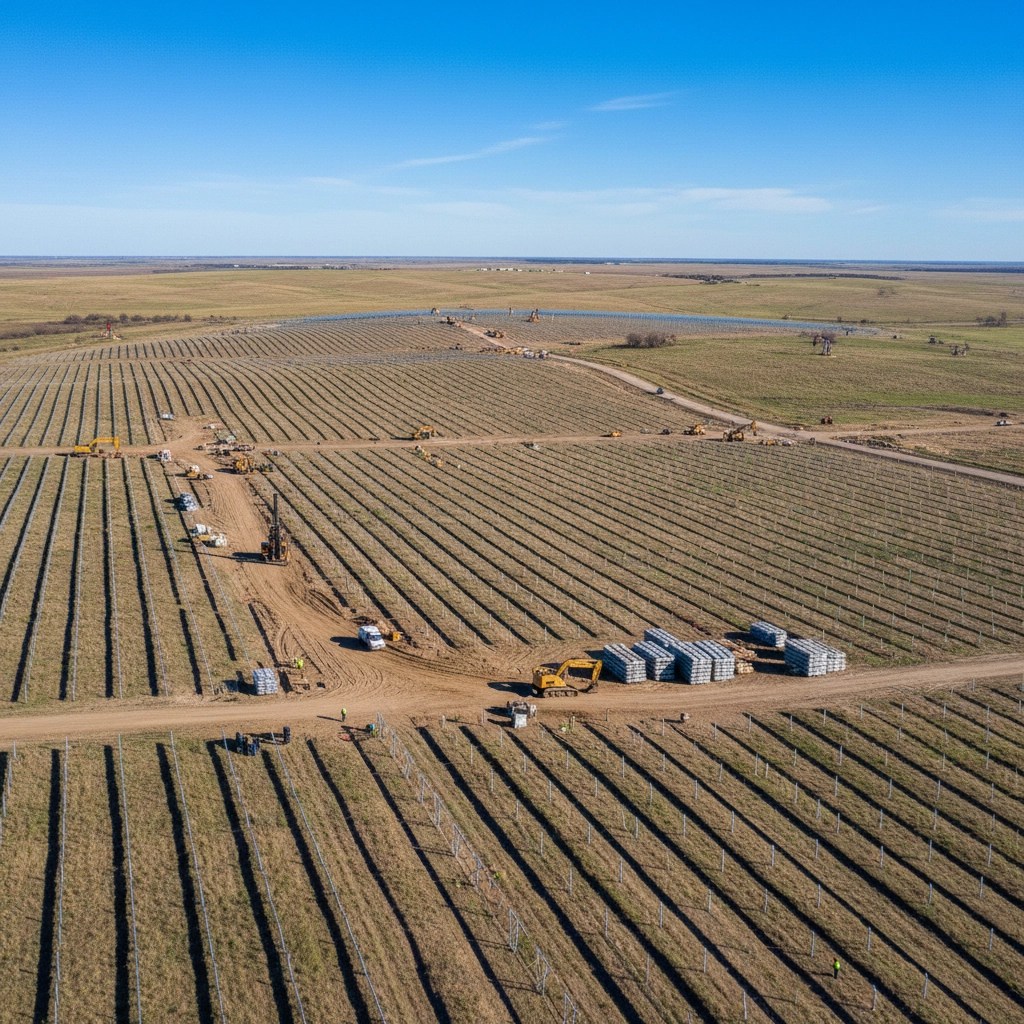
The complementary 1000 Mile Solar project adds an additional 400 megawatts of generating capacity to Meta's renewable energy portfolio. This project's accelerated timeline, with completion scheduled for 2026, provides immediate grid benefits and demonstrates the scalability of large-scale solar development in Texas.
These agreements expand Meta's renewable energy partnership with ENGIE to over 1.3 gigawatts across four Texas projects, establishing one of the largest corporate renewable energy portfolios in the state. The combined projects will generate more than 2.8 million megawatt-hours annually, equivalent to removing approximately 600,000 cars from Texas roads.
Economic Impact and Employment Generation
The $900 million investment in Swenson Ranch Solar alone will create over 350 construction positions during the development phase. Local workforce development programs are expected to provide training opportunities for specialized solar installation skills, contributing to the growth of renewable energy employment throughout the region.
Tax revenue projections indicate the projects will generate more than $158 million for Stonewall County and local hospital districts over their operational lifetimes. Property tax contributions from large-scale solar installations provide stable, long-term revenue streams for rural communities, funding essential services including education, healthcare, and infrastructure maintenance.
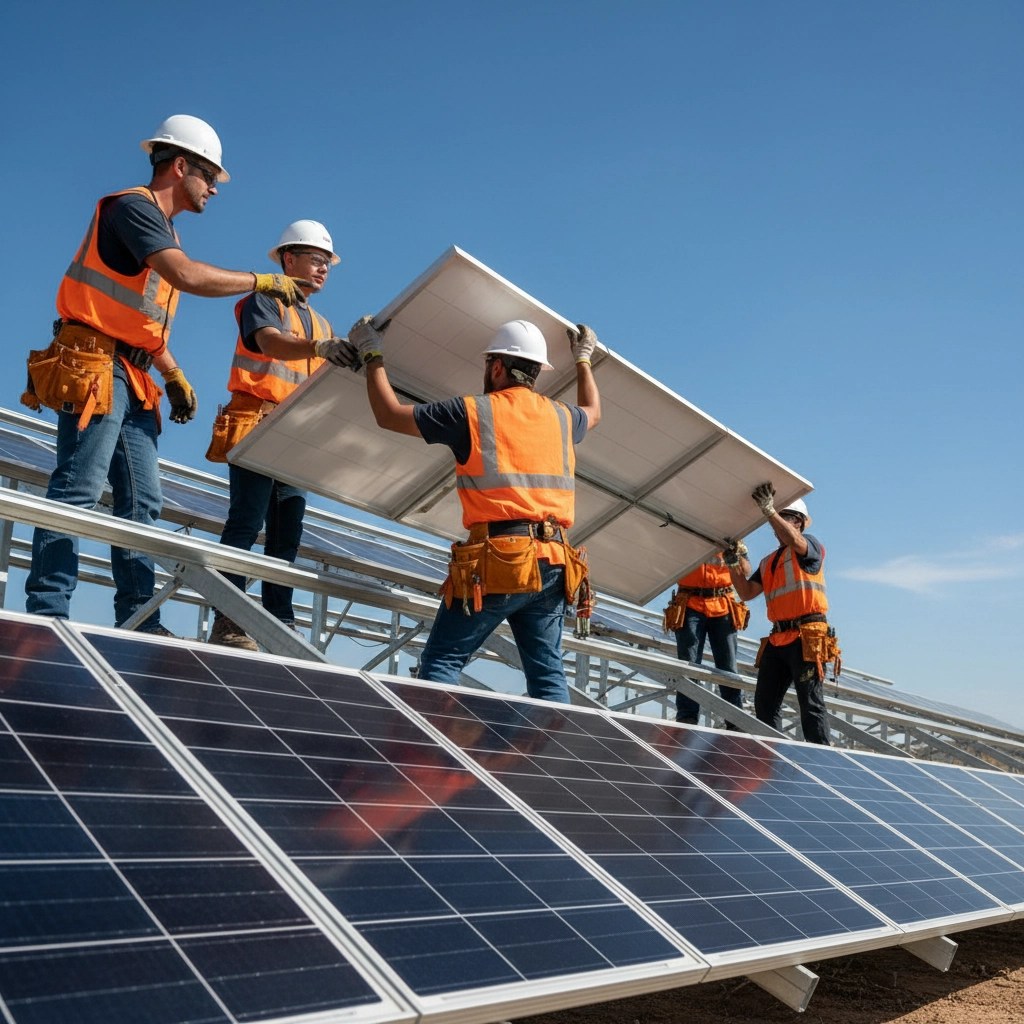
The economic multiplier effects extend beyond direct employment and tax revenue. Local businesses benefit from increased demand for services, equipment, and materials during construction phases. Operational maintenance requires ongoing employment for facility monitoring, equipment servicing, and grounds maintenance, providing permanent positions in rural areas where economic opportunities may be limited.
Grid Reliability and Stability Enhancement
Texas grid operators have identified utility-scale solar installations as critical components for maintaining system reliability during peak demand periods. The state's electricity demand reached 372 terawatt-hours in the first nine months of 2025, representing a 5% increase compared to the previous year. Solar generation capacity has increased by 50% during the same period, now providing 45 terawatt-hours of clean electricity.
Large-scale solar projects like those contracted by Meta provide predictable, dispatchable power during daylight hours when electricity demand typically peaks. The installations include advanced forecasting systems that allow grid operators to anticipate generation output and optimize system dispatch accordingly.
Battery storage integration at utility-scale solar facilities enhances grid stability by providing 4 gigawatts of power during evening hours when solar generation declines. This capability bridges the gap between peak solar production and evening electricity demand, reducing reliance on fossil fuel peaking plants and improving overall system efficiency.
Impact on Residential Solar Markets
The expansion of utility-scale solar development creates positive conditions for residential solar installation texas markets. Large projects drive down equipment costs through economies of scale in manufacturing and procurement. Solar panel cost texas has decreased significantly as utility-scale projects increase demand for standardized components and drive manufacturing efficiency improvements.
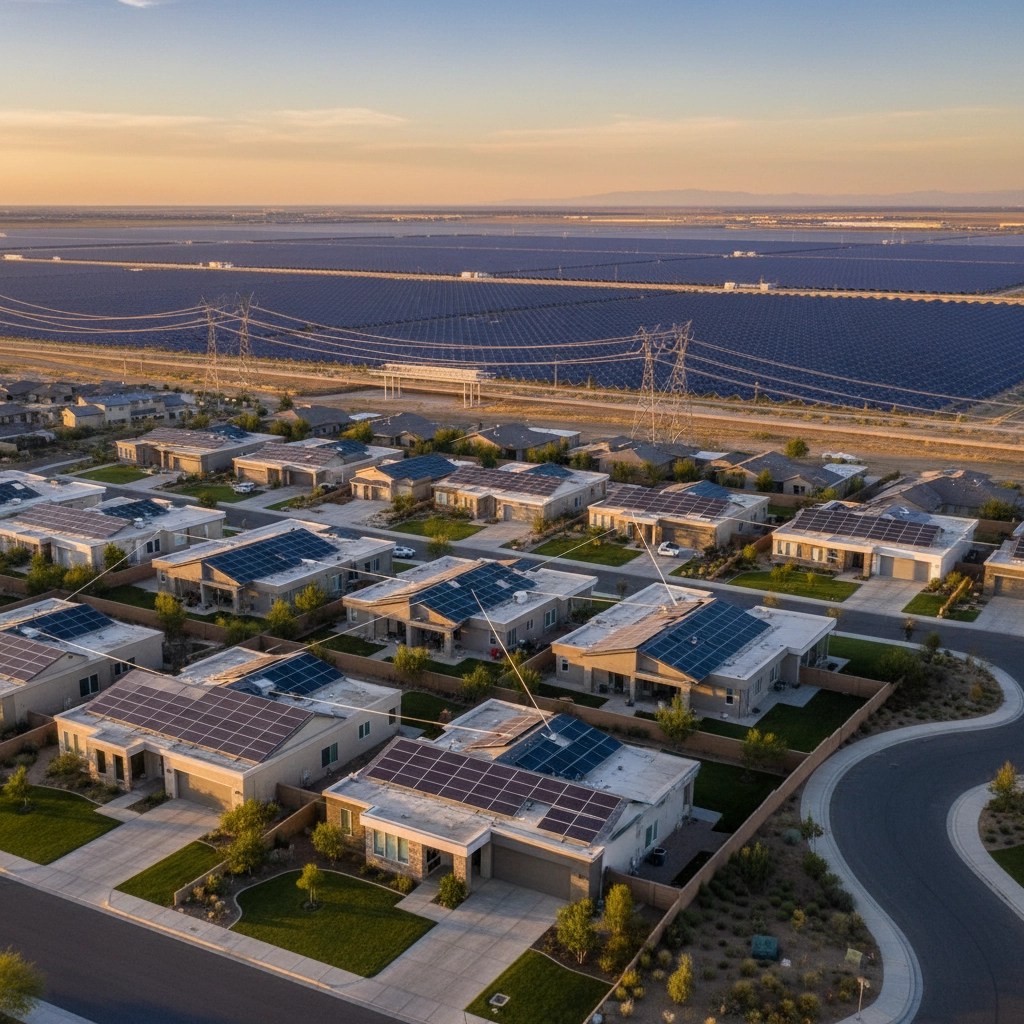
Grid stability improvements from utility-scale installations benefit homeowners with solar panels for home texas by reducing the frequency of power outages and voltage fluctuations. Enhanced grid reliability protects residential solar equipment and ensures consistent performance from home solar installation systems.
Net metering programs benefit from increased renewable energy on the grid, as utilities can more effectively manage distributed generation from residential systems when large-scale renewable resources provide baseline clean power. This creates more favorable conditions for solar savings texas programs and renewable energy for homes initiatives.
Manufacturing and Supply Chain Development
Meta's long-term power purchase agreements provide market certainty that encourages domestic solar manufacturing expansion. Texas has attracted several solar component manufacturing facilities, including polysilicon production, solar cell fabrication, and module assembly operations.
Local manufacturing reduces transportation costs and delivery timeframes for both utility-scale and residential solar projects. Supply chain localization also improves project scheduling reliability and reduces exposure to international trade disruptions that have historically affected solar equipment availability.
The growth in domestic manufacturing capacity supports job creation across the solar industry supply chain, from raw material processing through final system installation. These positions typically offer higher wages than traditional manufacturing roles and provide career advancement opportunities in the expanding clean energy sector.
Regulatory Environment and Policy Support
Texas maintains a competitive electricity market that facilitates large-scale renewable energy development through direct power purchase agreements. The state's regulatory framework allows corporations to contract directly with generators for long-term renewable energy supply, bypassing traditional utility procurement processes.
Solar incentives texas include federal investment tax credits that reduce project development costs by 30%. These incentives, combined with favorable state policies and abundant solar resources, create attractive conditions for utility-scale solar investment.

Property tax abatement programs in many Texas counties provide additional financial incentives for renewable energy development. These programs typically reduce property tax obligations during initial operational years while maintaining long-term revenue commitments to local governments.
Technology Integration and Innovation
The scale of Meta's renewable energy commitments drives technological innovation in solar generation and grid integration systems. Advanced inverter technology allows solar installations to provide grid services including voltage regulation, frequency response, and reactive power support.
Smart grid integration enables real-time monitoring and control of solar generation output, optimizing system performance and grid stability. These technological advances benefit both utility-scale installations and residential systems by improving overall grid efficiency and reliability.
Energy storage integration at utility-scale facilities demonstrates technologies that will eventually become standard for home solar installation systems. Battery storage costs continue declining as deployment scales increase, making renewable energy for homes more economically attractive.
Future Development Projections
Industry analysts project continued growth in corporate renewable energy procurement, with technology companies leading demand for clean electricity. Texas renewable energy development pipeline includes over 50 gigawatts of proposed solar projects, indicating sustained growth potential for the sector.
The success of Meta's Texas renewable energy strategy may encourage additional technology companies to establish operations in the state and pursue similar power purchase agreements. This trend would further accelerate utility-scale solar development and create additional economic opportunities throughout Texas.

Grid modernization investments required to accommodate increasing renewable generation will benefit all electricity customers through improved reliability, efficiency, and resilience. These infrastructure improvements support both utility-scale renewable development and distributed generation from residential solar systems.
The combination of abundant solar resources, supportive policies, and corporate demand positions Texas as a national leader in renewable energy deployment, creating sustained opportunities for solar installation texas companies and supporting the growth of clean energy employment throughout the state.
Rob Gonzalez – Manager DFW | 9566482089 | robert.gonzalez@ionsolar.com
Leave a Reply